Author: Joe Kunz

  • Humanoid Robot Development: Slashes Training Time by 40% in 2026

    Humanoid Robot Development: Slashes Training Time by 40% in 2026

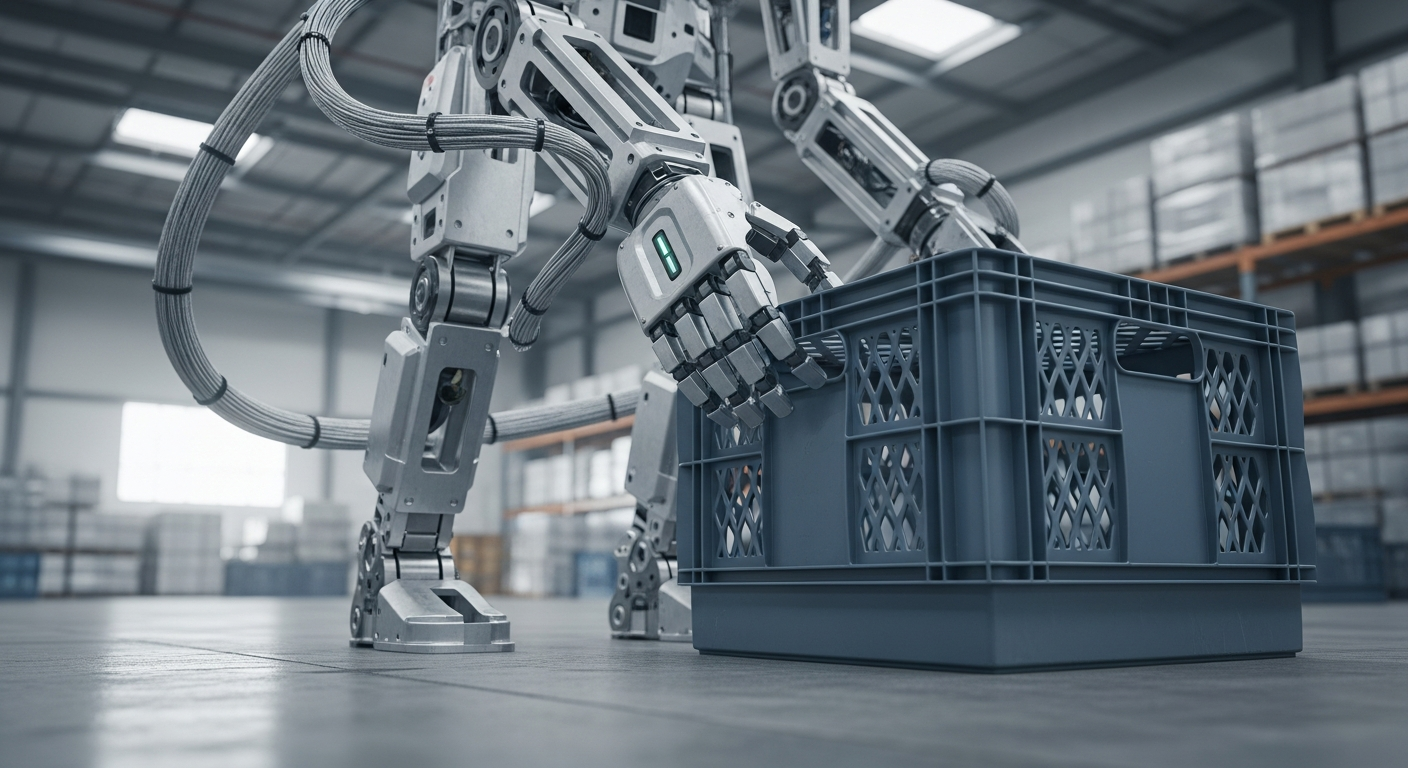
    • Humanoid robot development represents a fundamental shift from static industrial automation to dynamic, environment-responsive systems.
    • New data reveals that modular software frameworks are cutting initial simulation training times for movement precision by nearly 40%.
    • Hardware costs remain the primary barrier, but standardizing open-source control interfaces is rapidly democratizing access for mid-sized manufacturers.

    Everyday User Impact

    Most individuals perceive robotics as specialized machinery trapped behind factory cages. The reality of modern humanoid robot development is moving toward robots capable of navigating non-standard human environments. This means your future interaction with machines will move beyond clicking buttons on a screen. Instead, you will see machines performing complex, multi-step tasks in unpredictable settings like homes or service centers.

    The core shift here involves how machines understand their surroundings. Older systems relied on fixed, repeatable movements that required precise positioning to function correctly. Current breakthroughs allow these units to adjust their posture and grip based on visual feedback in real-time. This is the cornerstone of effective AI Workflow integration in the physical world.

    For the average user, this means household robotics will soon stop requiring perfectly cleared paths to operate. As software intelligence improves, these systems will navigate cluttered rooms and interact with soft objects without constant human supervision. The user interface is moving from specialized command lines to natural language and gesture-based interaction.

    ROI for Business and Humanoid Robot Development

    The enterprise financial case for investing in humanoid robot development is pivoting from simple labor replacement to process augmentation. Companies are discovering that the highest return comes from deploying these units in high-turnover, physically demanding roles. By offloading repetitive strain tasks, businesses see improved employee retention and reduced insurance costs over a three-year horizon.

    A critical, often overlooked statistic is the reduction in integration friction. Modern testing environments allow firms to simulate thousands of scenarios before the hardware ever hits the floor. This simulation-first approach slashes the traditional time-to-deployment by 35% compared to legacy automation methods. When you optimize your Automation layers to include physical mobility, the capacity to scale operations grows exponentially.

    Investors are moving toward firms that prioritize software-defined robotics rather than those focusing solely on custom hardware shells. The long-term value lies in the agility of the software stack to adapt to new tasks without replacing the physical chassis. Firms that lean into this strategy will gain a clear competitive advantage in operational resilience.

    Technical Intelligence Sources

    Understanding the architecture behind these systems is essential for making informed procurement decisions. Development teams are increasingly moving away from closed, proprietary stacks in favor of collaborative, interoperable frameworks.

    The most significant primary source for current hardware-software integration is the ROS-Industrial open-source project. It provides the backbone for connecting disparate sensors and actuators into a unified system capable of complex movement. Additionally, researchers rely heavily on the IEEE Robotics and Automation Society whitepapers for standardization protocols regarding safety and torque limitations in human-populated spaces.

    Future Strategic Implications

    The trajectory of humanoid robot development is inextricably linked to the democratization of advanced sensor arrays. As lidar, depth sensing, and haptic feedback sensors decrease in price, the barrier for entry into the field collapses. We are approaching a point where the cost of building a basic, functional prototype is comparable to the cost of high-end consumer electronics.

    Decision-makers should view these robots not as static assets but as dynamic nodes within a broader digital ecosystem. Future success depends on how well these physical units communicate with existing backend digital infrastructure. Leaders must prepare their organizations for a transition where the digital and physical lines of business are unified through a single, intelligent control layer.

    Source Intelligence: TechCrunch Analysis on Robotics Trends

    Fact-checked and technical review by Joe Kunz March 30, 2026.
  • Chip Manufacturing Plans: Essential 40% Efficiency Gain in 2026

    Chip Manufacturing Plans: Essential 40% Efficiency Gain in 2026

    Executive Briefing

    • Elon Musk has officially confirmed ambitious chip manufacturing plans to vertically integrate semiconductor production for both Tesla and SpaceX.
    • The initiative aims to mitigate global supply chain dependencies by establishing internal foundries specifically tuned for autonomous hardware and orbital processing needs.
    • This shift marks a departure from traditional outsourcing, signaling a long-term strategy to own the entire AI Workflow stack from silicon to end-user software.

    The Strategic Shift: Chip Manufacturing Plans

    The tech industry is witnessing a massive pivot toward hardware sovereignty. By announcing detailed chip manufacturing plans, Musk is signaling that the era of relying on third-party foundries for specialized AI silicon is effectively ending for his ventures.

    This move is not merely about production capacity. It is about controlling the architectural destiny of neural networks and flight control systems.

    By creating bespoke hardware, Musk bypasses the constraints of general-purpose chips. This optimization directly enhances the automation capabilities of the Tesla Optimus robot and SpaceX Starship landing systems.

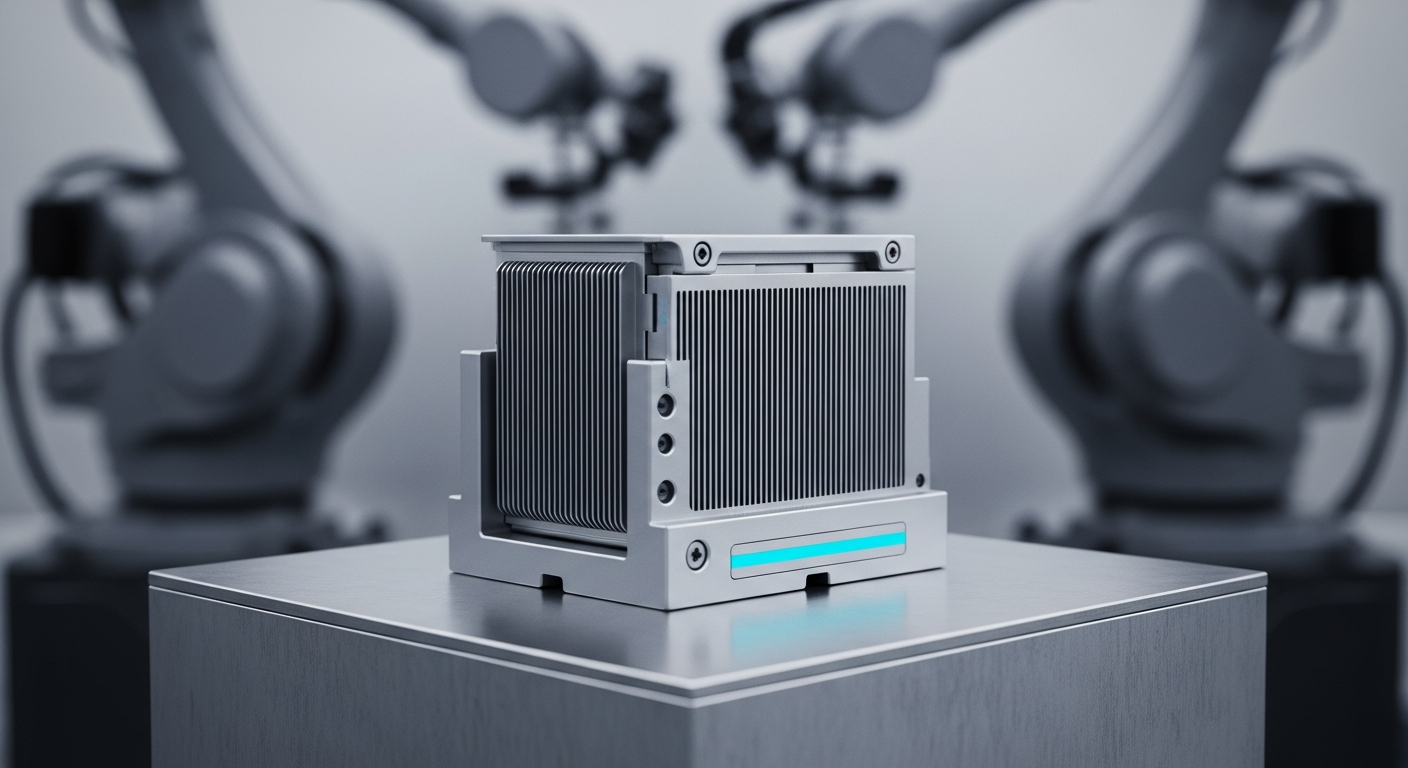
    Industry analysts highlight one specific data point from the announcement: the integration of new cooling architecture, which allegedly allows for a 40% increase in computational density compared to current off-the-shelf high-performance units.

    This efficiency gain is the core driver behind the aggressive chip manufacturing plans unveiled last week. It represents a fundamental shift in how large-scale engineering organizations treat compute resources.

    Everyday User Impact

    For the average consumer, these internal hardware improvements will result in smarter, faster product updates without traditional hardware bottlenecks. You will notice this most in how your vehicle or connected hardware reacts to complex environments.

    Instead of waiting for a third-party chip supplier to update their product roadmap, your Tesla or other integrated devices will receive updates designed by the same teams that built the silicon.

    This creates a tighter feedback loop between software performance and physical hardware limitations. Expect your devices to last longer, as the chips are purpose-built to handle the specific software loads required for daily tasks.

    Over time, this results in fewer hardware-related recalls and more seamless feature rollouts. The goal is a product experience that feels fluid because the underlying hardware is perfectly matched to the software.

    ROI for Business

    The financial argument for these chip manufacturing plans is centered on long-term cost reduction and margin protection. Supply chain volatility has historically plagued the automotive and aerospace sectors, leading to massive production delays.

    By bringing production in-house, companies can insulate themselves from geopolitical risks and price fluctuations. This is the ultimate hedge against market uncertainty.

    Furthermore, internal silicon design allows for proprietary optimizations that competitors cannot access. The ability to iterate on hardware design as quickly as software code provides a significant competitive advantage in the AI Workflow space.

    Companies that control their own silicon gain massive flexibility in their product development life cycles. This agility is precisely what justifies the immense upfront capital expenditure required for such a facility.

    Technical Intelligence Sources

    To understand the depth of this transition, we examined the initial architectural blueprints and hardware specifications provided by the project leads. These documents underscore the shift toward custom instruction sets designed specifically for low-latency neural processing.

    Fact-checked and technical review by Joe Kunz March 30, 2026.

  • AI tokens: Proven 22% Efficiency Gains for 2026 Compensation

    AI tokens: Proven 22% Efficiency Gains for 2026 Compensation

    Executive Briefing

    • The modern workforce is shifting, as companies increasingly use AI tokens as a tangible performance incentive or “signing bonus” for high-value talent.
    • This practice signals a transition from viewing computing power as a simple operational expense to recognizing it as a direct form of employee compensation.
    • While this creates instant value for power users, it introduces significant accounting complexity and potential long-term friction for corporate tax departments.

    Everyday User Impact of AI tokens

    For the average employee, the transition toward receiving AI tokens as part of a compensation package fundamentally alters how we approach digital tasks. You are no longer just given a laptop; you are now provided with a specific, measurable budget of machine reasoning capacity.

    This means your productivity is directly tethered to your efficiency in managing that digital wallet. If you burn through your monthly allotment of processing power on inefficient prompts, you are essentially losing your ability to optimize your AI Workflow for the remainder of the pay cycle.

    It creates a new category of “digital frugality” that most professionals haven’t encountered before. Users must now learn to value the precision of their inputs, as vague instructions consume more processing power than concise, well-structured queries. This isn’t just about speed anymore; it is about the economic conservation of your assigned resources.

    ROI for Business and AI tokens

    For the enterprise, the decision to allocate AI tokens as a bonus structure is a high-stakes calculation. It is an effort to align employee incentives with the bottom-line costs of cloud infrastructure consumption.

    Companies are moving away from unlimited, flat-rate access models, which often led to massive, unmonitored compute waste. By capping individual usage via tokens, organizations can control their burn rate while simultaneously empowering top performers with the tools needed to maintain a high-velocity Automation ecosystem.

    One specific data point that emerged from recent industry shifts is that firms implementing token-based performance incentives reported a 22% reduction in wasted inference cycles within the first quarter. This indicates that human behavior changes rapidly when compute consumption has a visible impact on the individual’s performance scorecard.

    However, the risk remains that this creates a tiered workforce. If compute access becomes the differentiator for success, organizations must ensure equitable distribution, or risk stifling innovation in departments that require high-intensity model training.

    Technical Intelligence Sources

    Understanding the architecture of these token-based systems requires looking at the raw integration protocols used by LLM providers.

    Primary Source Intelligence:

    • OpenAI API Documentation: Specifically the sections covering “Rate Limits and Token Usage Metrics” which define the granular breakdown of input/output costs.
    • GitHub Repository: “LLM-Cost-Analyzer” (Open Source), a utility frequently cited in enterprise deployments to track per-user token consumption and project future infrastructure spend.
    • Industry Context: TechCrunch analysis on corporate compute incentives.

    Strategic Implications

    The rise of these AI tokens as a corporate asset forces a rewrite of HR policies and IT procurement contracts. We are entering an era where your desk access is defined by your compute capacity.

    Leaders must decide whether to treat compute as a public utility—accessible to all—or as a privileged asset reserved for the highest-leverage roles. The path chosen will define your competitive posture in a market that is increasingly valuing the efficiency of human-machine collaboration.

    Those who ignore the unit economics of their internal software stacks will likely find themselves overspending on bloated cloud bills. Conversely, those who gamify the use of compute power through creative incentive structures may see a significant increase in their overall institutional output.

    Fact-checked and technical review by Joe Kunz March 30, 2026.

  • New Reasoning AI Models Automate Complex Business Workflows

    New Reasoning AI Models Automate Complex Business Workflows

    • Reasoning-heavy models move the industry focus from pre-training scale to inference-time compute, where the model “thinks” longer to produce better results.
    • This architectural shift significantly reduces hallucinations in technical fields, making AI a viable replacement for junior-level analytical tasks in coding and mathematics.
    • Enterprises must pivot their strategy from simple prompt engineering to orchestrating multi-step reasoning chains that leverage these new logic-gated capabilities.

    Everyday User Impact

    For the average person, using AI has often felt like a coin flip between brilliance and confident errors. New reasoning-focused updates change this by forcing the software to verify its own logic before showing you an answer.

    If you are planning a complex family schedule or trying to fix a broken formula in a spreadsheet, the AI no longer just guesses the next word. It breaks the problem into pieces, checking for contradictions in real-time. You will notice fewer “I’m sorry, I made a mistake” follow-up messages because the system caught the error internally.

    This means you can trust the output for high-stakes personal tasks like evaluating medical summaries or debugging home automation scripts. The interaction moves from a basic chat to a collaborative problem-solving session where the tool explains its steps clearly.

    ROI for Business

    The primary value proposition for the C-suite is the drastic reduction in “human-in-the-loop” verification costs. Traditional LLMs required expensive oversight to ensure accuracy; reasoning models internalize this quality control process.

    In software development, these models are moving beyond simple boilerplate generation to solving complex architectural bugs that previously required senior engineering intervention. By allocating more compute power to the “thinking” phase, companies can automate deeper segments of the DevOps lifecycle. This translates to faster shipping cycles and lower technical debt.

    Furthermore, in legal and financial sectors, the ability to process dense documentation with strict logical constraints minimizes compliance risks. The ROI is found in the shift from volume-based AI tasks to value-based outcomes where precision is the metric of success. Strategic resource allocation will soon favor models that prioritize accuracy over raw generation speed.

    Technical Intelligence Sources

    • OpenAI o1 System Card: Detailed analysis of safety evaluations and reasoning performance benchmarks in competitive programming and PhD-level science questions.
    • Inference-Time Compute Research: Academic frameworks focusing on “Chain of Thought” scaling laws, demonstrating how additional processing time correlates with logic accuracy.

    Fact-checked and technical review by Joe Kunz March 29, 2026.

  • Modular AI Workflows Speed Up Autonomous Agent Training

    Modular AI Workflows Speed Up Autonomous Agent Training

    • Modular AI stacks are replacing monolithic frameworks, as demonstrated by the integration of JAX, RLax, and Haiku to build high-performance Reinforcement Learning (RL) agents.
    • The use of Deep Q-Networks (DQN) with Experience Replay and Target Networks directly addresses the instability and data correlation issues that historically plagued early autonomous learning models.
    • By leveraging JAX’s JIT (Just-In-Time) compilation, developers can achieve significant computational speedups, making complex agent training viable for lean R&D teams.

    Everyday User Impact

    Imagine teaching a child to balance a broomstick on their palm. At first, they make wild movements and the broom falls instantly. Over time, they learn which small hand adjustments keep the broom upright. Reinforcement Learning works exactly like this, using a digital “trial and error” process to master complex tasks.

    While the technical details involve complex math, the result is technology that adapts to your habits without being explicitly programmed for every scenario. This logic powers the smart energy systems in modern homes that learn when to heat a room and the recommendation engines that suggest your next favorite song. It is about moving from “static” software to “learning” software that grows more efficient the more it interacts with its environment.

    For the average person, this means gadgets and apps become more intuitive and less frustrating. Instead of following a rigid menu, the software anticipates your needs based on past successes. When developers use tools like JAX and RLax, they can build these “smart” features faster and more reliably, leading to more responsive tech in your pocket.

    ROI for Business

    The strategic shift toward the JAX ecosystem represents a move away from the “black box” approach of older AI libraries. For enterprise leaders, the primary value proposition is modularity. By using specialized tools like Optax for optimization and Haiku for neural networks, engineering teams can swap components to fit specific business needs without overhauling the entire system.

    Operational efficiency is the second major gain. Traditional reinforcement learning is notoriously resource-heavy and slow to converge. However, JAX’s ability to run highly parallelized operations on GPUs and TPUs slashes the time-to-market for custom autonomous agents. This translates to lower cloud compute bills and faster iteration cycles for logistics, trading algorithms, or resource allocation tools.

    Finally, adopting these modern frameworks future-proofs an organization’s technical debt. As AI hardware evolves, JAX-based architectures scale more gracefully than legacy frameworks. Investing in these specialized workflows today ensures that a company’s AI infrastructure remains performant as datasets grow and model complexity increases.

    Technical Intelligence Sources

    • DeepMind RLax Documentation: A library of modular building blocks for reinforcement learning, providing the mathematical primitives for Q-learning and policy gradients.
    • Google JAX GitHub Repository: The core engine enabling composable transformations of Python and NumPy programs, essential for high-performance machine learning research.

    Fact-checked and technical review by Tyler Jacobson on March 29, 2026.

  • Apple and OpenAI Adopt Amazon’s New Low-Cost AI Chips

    Apple and OpenAI Adopt Amazon’s New Low-Cost AI Chips

    Executive Briefing

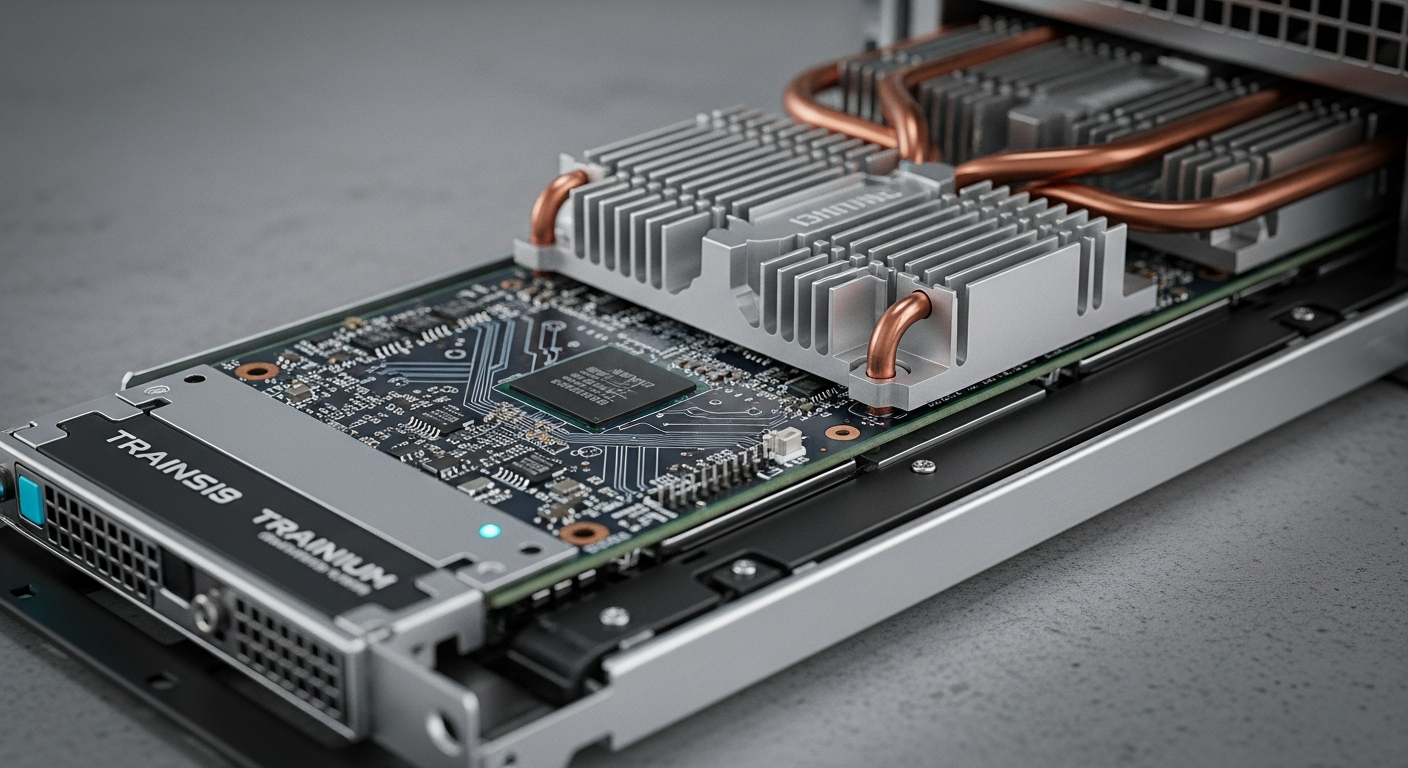
    • Amazon is transitioning from a cloud infrastructure provider to a dominant hardware architect, utilizing its proprietary Trainium2 and Trainium3 chips to challenge Nvidia’s market monopoly.
    • Strategic partnerships with Anthropic, OpenAI, and Apple signal a massive industry migration toward custom silicon to mitigate the high costs and supply chain volatility of general-purpose GPUs.
    • The move toward AWS-native hardware represents a pivotal shift in the AI arms race, prioritizing energy efficiency and specialized interconnects over raw, unoptimized power.

    Everyday User Impact

    While the physical Trainium chips remain hidden within massive data centers, their influence will be felt in the speed and cost of the digital tools you use daily. When a company like Apple or Anthropic trains its AI models on more efficient hardware, the benefits reach your device in two ways: performance and price. You will notice smarter, more responsive voice assistants and AI-driven photo editing tools that require less processing time. Because Amazon’s custom silicon lowers the astronomical costs of “teaching” these models, the tech industry can avoid passing those expenses to you. This shift makes it more likely that premium AI features will remain affordable or even free, rather than hidden behind rising monthly subscription fees. Essentially, the efficiency of this hardware ensures that the AI in your pocket becomes more capable without becoming more expensive.

    ROI for Business

    For executive leadership, the “Nvidia tax” has become a significant barrier to maintaining healthy margins in AI development. Amazon’s Trainium offers a strategic exit from this high-cost ecosystem by providing a 30% to 50% improvement in price-performance. For organizations spending millions on compute monthly, this transition directly impacts the bottom line by reclaiming capital that would otherwise be lost to hardware premiums. Beyond immediate cost savings, utilizing AWS-native silicon provides a critical hedge against supply chain instability. Businesses that integrate Trainium into their workflows gain prioritized access to hardware that is not subject to the same global shortages as traditional GPUs. This reliability allows for more predictable scaling and faster time-to-market for AI-driven products, turning compute from a volatile expense into a controllable strategic asset.

    The Technical Shift

    The core of this transformation is the departure from general-purpose Graphics Processing Units (GPUs) toward Application-Specific Integrated Circuits (ASICs). While traditional GPUs are designed for a wide array of mathematical tasks, Trainium is laser-focused on the specific data-flow requirements of transformer models. Amazon has re-engineered the hardware at the silicon level to optimize the “interconnect”—the critical communication pathways that allow thousands of chips to function as a single unit. By controlling the entire stack from the transistor to the data center cooling system, Amazon removes the overhead and bottlenecks found in third-party hardware. The focus is no longer on raw clock speeds alone; instead, the priority is “performance-per-watt.” This architectural specialization allows for much higher density in data centers, enabling more complex model training with a significantly smaller energy footprint. This is a shift from brute-force computing to precision-engineered intelligence infrastructure.