Author: Joe Kunz

  • AI Now Automates Animal Welfare Audits in the Food Supply

    AI Now Automates Animal Welfare Audits in the Food Supply

    Executive Briefing

    • Silicon Valley animal welfare groups are pivoting from traditional activism to a tech-first approach, using proprietary AI to monitor factory farm conditions and automate legal challenges.
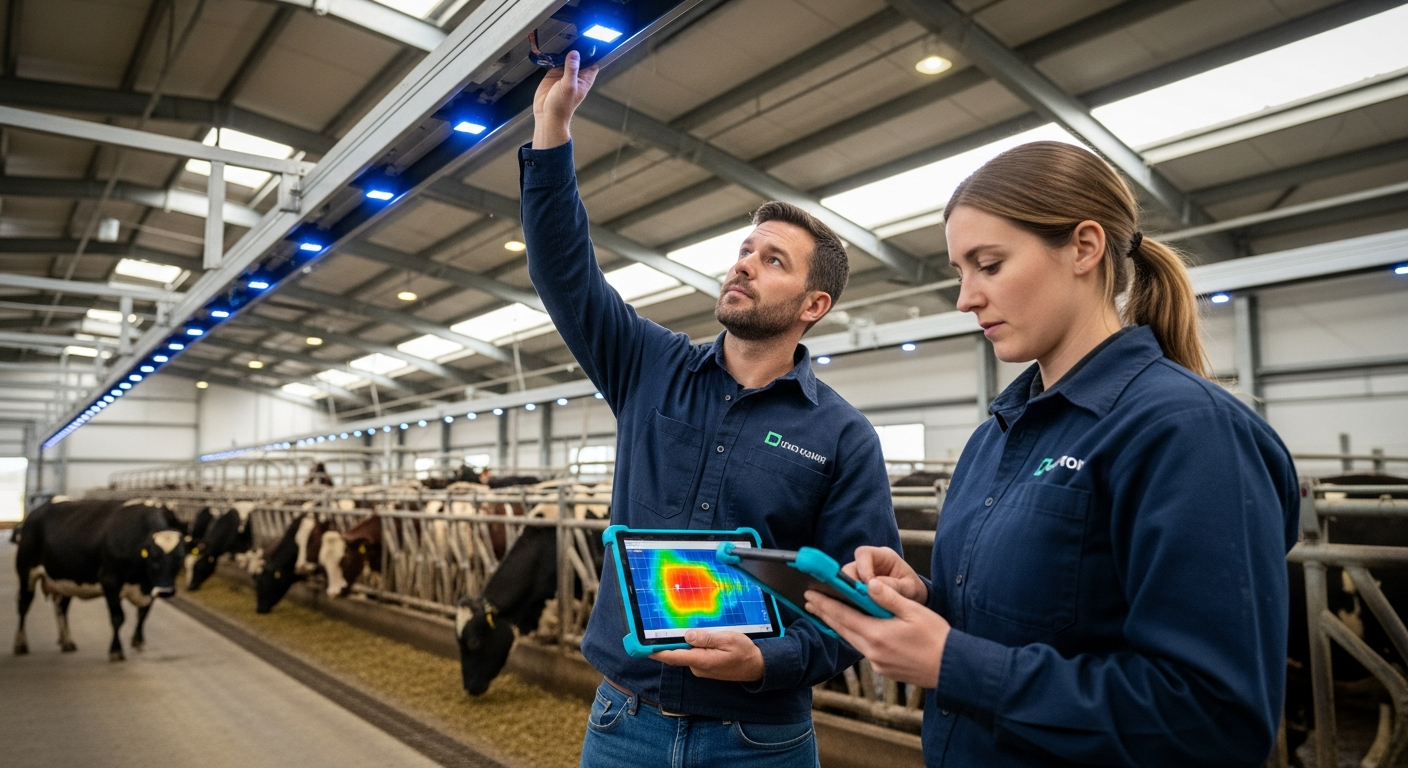
    • The movement is prioritizing “precision welfare,” leveraging computer vision and acoustic sensors to quantify animal distress in ways that human inspectors cannot match.
    • A significant capital shift is occurring as Effective Altruism (EA) donors fund high-compute projects aimed at accelerating the market parity of alternative proteins through molecular modeling.

    The intersection of machine learning and animal advocacy marks a departure from emotional storytelling toward data-backed systemic disruption. By treating animal welfare as a scalable engineering problem, organizations in the Bay Area are building tools that can audit global supply chains in real-time. This shift creates a new landscape where agricultural giants face persistent, automated scrutiny that transcends geographic borders and local regulatory limitations.

    Everyday User Impact

    This technological shift will fundamentally change how you interact with the food system and your own environment. Soon, the “ethical” or “organic” labels on your grocery store shelves will lose their ambiguity. You will likely see products accompanied by QR codes that provide an AI-verified audit of the animal’s life, from health metrics to living conditions, backed by 24/7 sensor data. This removes the burden of research from your shopping trip; the technology does the vetting for you, ensuring that “cage-free” is a data point rather than a marketing slogan.

    Beyond the grocery aisle, these advancements are trickling down to the home. New AI tools are being developed to translate the subtle vocalizations and body language of pets into actionable data. This means your future home camera system might alert you that your dog is experiencing specific anxiety or physical discomfort long before they show visible symptoms. You will spend less time guessing what your pets need and more time providing precise care based on biological signals interpreted by specialized neural networks.

    ROI for Business

    For corporations, the rise of AI-driven animal welfare creates a dual reality of increased liability and operational efficiency. Activist groups now possess “algorithmic accountability” tools that scan satellite imagery and public filings to detect welfare violations automatically. This introduces a high-velocity reputational risk that traditional PR cannot manage. However, for proactive food producers, integrating these same AI systems offers a clear return on investment. Automated monitoring reduces the spread of zoonotic diseases, lowers mortality rates in livestock, and optimizes feed conversion ratios. By adopting these standards early, companies can mitigate legal risks while simultaneously capturing the growing market segment of consumers willing to pay a premium for verified transparency.

    The Technical Shift

    The core innovation driving this movement is the transition from manual observation to “Multi-Modal Bio-Monitoring.” Activists and researchers are training computer vision models to recognize “micro-expressions” and postural shifts in livestock that indicate stress or illness. These models process petabytes of video data from industrial facilities, identifying patterns that escape the human eye. Parallel to this, researchers use Large Language Models (LLMs) to ingest and cross-reference thousands of pages of global agricultural regulations. This allows for the automated generation of legal briefs when sensor data detects a deviation from statutory requirements.

    Furthermore, the movement is investing heavily in “Computational Gastronomy.” By using AI to map the molecular structure of animal proteins, startups are identifying plant-based combinations that replicate the texture and flavor of meat at a fraction of the current R&D cost. This isn’t just about better veggie burgers; it is about using generative design to create entirely new categories of food that bypass the biological inefficiencies of traditional farming. The technical barrier for entry in the food industry is shifting from land ownership to compute power and proprietary datasets.

  • How Reasoning AI Automates Complex Business Workflows

    How Reasoning AI Automates Complex Business Workflows

    Executive Briefing

    • OpenAI has transitioned from pattern-matching language models to reasoning-based systems with the release of the o1 series, shifting the focus from speed to cognitive accuracy.
    • The new architecture utilizes reinforcement learning and “chain-of-thought” processing to solve complex STEM problems, placing it in the 89th percentile of competitive programming participants and top-tier math competitors.
    • Strategic implementation now requires a bifurcated approach: using legacy fast models (GPT-4o) for creative tasks and reasoning models (o1) for high-stakes logic, debugging, and multi-step planning.

    Everyday User Impact

    For the average person, this shift moves AI from being a conversational partner to a reliable problem-solver. If you have ever asked a chatbot to help with a logic puzzle or a complex recipe only to have it give you a confidently wrong answer, you have experienced the limits of current technology. This new wave of reasoning models changes that by essentially “thinking before it speaks.”

    This means your phone or computer will soon be able to act as a high-level tutor. If a student uploads a difficult physics problem, the AI won’t just pull a similar answer from its memory; it will work through the math step-by-step, checking its own work as it goes. If you are trying to plan a complex travel itinerary with dozens of variables like flight times, budget constraints, and dietary needs, the AI will spend thirty seconds “thinking” to ensure every detail aligns, rather than spitting out a flawed plan in two seconds. You will spend less time double-checking the AI’s work and more time using the results it provides.

    ROI for Business

    The business value of reasoning models lies in the drastic reduction of human oversight required for technical tasks. For software development firms, the cost-benefit analysis is clear: while o1-level models are more expensive per token and take longer to generate a response, the accuracy in code generation and debugging reduces the “technical debt” created by lower-tier models. A senior engineer spending three hours fixing an AI’s logic error costs significantly more than a model that takes one minute to get the logic right the first time. Companies should view this as a shift from “LLMs as writers” to “LLMs as agents.” The financial risk of hallucinations in legal, financial, or medical data is mitigated when the model is trained to penalize its own incorrect assumptions before they reach the user. High-latency, high-accuracy AI is a feature, not a bug, for any enterprise where “mostly correct” is the same as “entirely useless.”

    The Technical Shift

    Behind the scenes, we are witnessing the end of the “more data is all you need” era and the beginning of the “inference-time compute” era. Traditional models are “System 1” thinkers—they react instantly and instinctively based on probability. The new technical paradigm introduces “System 2” thinking. By using reinforcement learning, the model is taught to use an internalized chain-of-thought. It breaks down a prompt into smaller sub-tasks, tries different approaches, recognizes its own mistakes, and tries an alternative path before presenting the final output.

    Crucially, the scaling laws have changed. We previously believed that model intelligence was capped by the amount of data used during training. Now, developers have found that you can increase a model’s performance significantly by giving it more time and computational power at the moment it processes a request. This hidden “thinking” phase is not just a UI trick; it is a fundamental change in how neural networks navigate probability spaces. We are moving away from models that guess the next likely word to models that verify the next logical step.

  • New AI Robots Ready to Automate Complex Outdoor Tasks

    New AI Robots Ready to Automate Complex Outdoor Tasks

    Executive Briefing

    • Robotics is transitioning from controlled warehouse environments to “unstructured” outdoor settings, proving that machines can now navigate and manipulate complex, variable materials like snow.
    • The integration of Vision-Language-Action (VLA) models allows consumer robots to interpret creative, non-linear commands such as “build a snowman” without requiring pre-programmed coordinates.
    • Advanced thermal management and high-torque actuators have reached a price point where household robots can operate in sub-zero temperatures, a previous barrier for consumer electronics.

    Everyday User Impact

    For most people, the arrival of robots that can handle snow means the end of a long list of winter chores. Instead of spending your Saturday morning bundled up in layers to clear the driveway or help your kids with heavy lifting in the yard, a household assistant can take over. This goes beyond simple snow blowing; these machines now possess the physical “touch” to handle delicate tasks, like stacking snow or clearing ice off a windshield without scratching the glass.

    You won’t need to learn how to code or use a complicated remote. Because these robots use the same kind of intelligence found in modern chatbots, you can simply tell them to “clear a path to the mailbox” or “help the kids build a fort.” The robot understands the physical world around it, recognizing the difference between a pile of snow and a parked car. This turns the robot from a specialized tool into a general-purpose helper that adapts to the weather just as you do.

    ROI for Business

    The commercial implications for property management and municipal maintenance are significant. Snow removal has historically been a high-cost, high-liability industry plagued by seasonal labor shortages and rising insurance premiums. Deploying autonomous units capable of operating in extreme cold reduces the reliance on manual labor during peak storm windows. For businesses, this translates to a shift from variable hourly labor costs to a predictable capital expenditure or a “Robotics-as-a-Service” (RaaS) subscription model. Beyond simple cost-cutting, these robots mitigate the risk of slip-and-fall lawsuits by ensuring 24/7 maintenance of walkways, a task that is often inconsistent when relying on human crews. Companies that adopt early will likely see a 30-40% reduction in winter operational overhead within three seasons.

    The Technical Shift

    The true breakthrough lies in the move away from rigid, “if-then” programming toward adaptive neural architectures. Building a snowman is a deceptively difficult task for a machine; it requires understanding the structural integrity of snow, which changes based on temperature and moisture content. This requires real-time tactile sensing—essentially a sense of “touch” that allows the robot to feel how much pressure to apply before a snowball collapses.

    Behind the scenes, we are seeing the convergence of three technologies: sophisticated haptic feedback loops, cold-resistant solid-state batteries, and multi-modal AI models. These models do not just see pixels; they predict the physics of the environment. By training on massive datasets of human movement and material science, the robots have learned to compensate for slippery surfaces and the weight distribution of heavy, wet snow. This represents a pivot from “automation,” where a robot repeats a single task, to “autonomy,” where the robot perceives a goal and determines the best physical path to achieve it in a changing environment.

    The Investigative Outlook

    While a “robot snowman” sounds like a novelty, it serves as a stress test for the next generation of physical AI. If a robot can navigate the unpredictable, low-friction, and high-moisture environment of a winter backyard, it can likely handle almost any household or industrial task. We are moving toward a reality where the physical world is as searchable and manipulatable as a digital document. The friction between digital intent and physical action is rapidly disappearing, and the winter landscape is simply the latest frontier to be digitized and automated.

  • OpenAI Shifts Focus to AI That Controls Your Computer

    OpenAI Shifts Focus to AI That Controls Your Computer

    Executive Briefing

    • The AI landscape is pivoting from conversational text generators to “Action Models” that control the computer’s cursor, keyboard, and browser to execute complex workflows.
    • Industry leaders including Anthropic, Google, and OpenAI are prioritizing vision-based interaction, allowing AI to navigate legacy software that lacks modern API connections.
    • The primary bottleneck has shifted from processing speed to reliability; success now depends on the model’s ability to self-correct when a website layout changes or an unexpected pop-up appears.

    Everyday User Impact

    For the average person, this shift marks the end of “swivel-chair” tasks—those annoying moments where you have to copy information from an email, paste it into a spreadsheet, and then upload that spreadsheet to a different website. Instead of you doing the clicking, you will simply describe the outcome you want. Your computer will essentially have a digital pair of hands.

    Imagine telling your laptop, “Organize my travel for the Chicago conference.” The AI won’t just list flight options; it will open your browser, navigate to your preferred airline, select a flight that fits your calendar, book a hotel within walking distance of the venue, and add the receipts to your expense folder. You move from being the operator of the machine to being the supervisor of a digital assistant. You will spend significantly less time navigating menus and more time reviewing the final results of your requests.

    ROI for Business

    For organizations, the transition to agentic workflows represents a massive leap in operational efficiency, particularly in departments hampered by legacy software. Many enterprise tools are old and do not talk to each other through standard code-based integrations (APIs). Previously, automating these systems required expensive, brittle custom software. Vision-based AI bypasses this hurdle by interacting with the software exactly like a human does—by looking at the screen. This allows companies to automate back-office clerical work, data entry, and multi-step procurement processes without overhauling their existing IT infrastructure. However, the financial risk shifts toward security; businesses must now implement “human-in-the-loop” checkpoints to ensure autonomous agents do not execute unauthorized financial transactions or leak sensitive data while navigating open-web environments.

    The Technical Shift

    We are witnessing the convergence of Large Language Models (LLMs) and Computer Vision. Traditional AI interacts with the world through a window of text. The new generation of agents uses a Vision-Language Model (VLM) to interpret pixels. The process involves the model taking frequent screenshots of the desktop, identifying the (x,y) coordinates of buttons or text fields, and then translating a high-level goal into a series of discrete mouse movements and keystrokes.

    This requires a sophisticated “reasoning” loop. When an agent clicks a button and nothing happens, it must be able to diagnose the failure: Is the internet slow? Did the button move? Was there a login error? Unlike older robotic process automation (RPA) which broke if a single pixel changed, these new agents use semantic understanding to find the “Submit” button regardless of its color or position. This shift moves AI from a passive knowledge retrieval tool to an active participant in the operating system, treating the entire GUI (Graphical User Interface) as its playground rather than just a chat box.

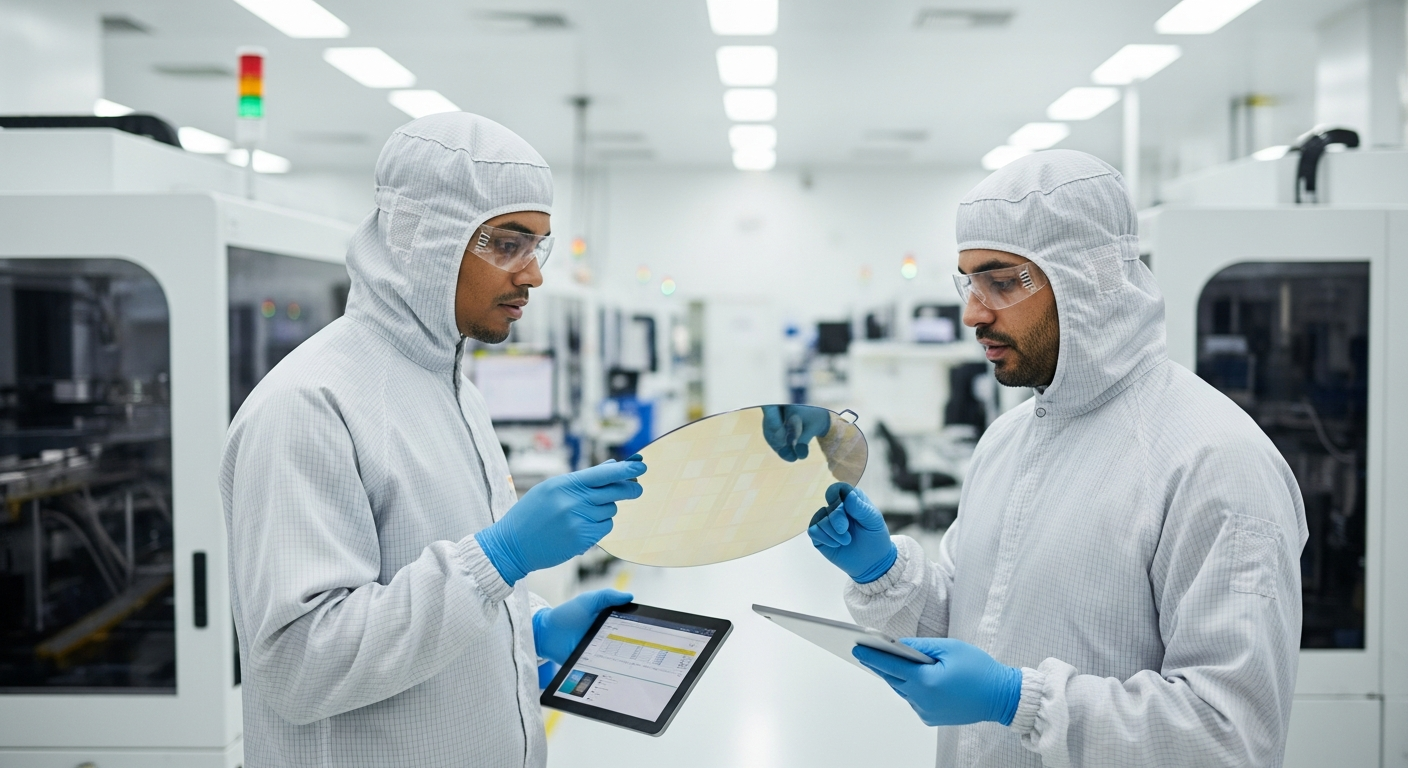
  • Musk to Build In-House AI Chips for Tesla and SpaceX

    Musk to Build In-House AI Chips for Tesla and SpaceX

    Executive Briefing

    • Vertical Sovereignty: Tesla and SpaceX are moving to eliminate reliance on external silicon providers like NVIDIA and TSMC by building proprietary fabrication facilities designed for high-performance edge computing.
    • Supply Chain De-risking: This strategic pivot addresses chronic semiconductor shortages and geopolitical instability by internalizing the entire production lifecycle, from architecture design to physical manufacturing.
    • Specialized Architecture: The initiative focuses on dual-purpose silicon—radiation-hardened chips for SpaceX’s Starlink and orbital platforms, and high-inference ASICs (Application-Specific Integrated Circuits) for Tesla’s humanoid robots and autonomous driving systems.

    Everyday User Impact

    For the average consumer, this shift translates to faster, more capable hardware that does not rely on a constant cloud connection. If you drive a Tesla, this means the vehicle’s “brain” will process complex visual data with significantly lower latency, potentially making Full Self-Driving maneuvers feel smoother and more human-like. Because the hardware is designed specifically for the car’s software, the system becomes more energy-efficient, which can slightly extend battery range by reducing the power draw from the onboard computer.

    For Starlink users, custom silicon means smaller, more powerful ground terminals. Current satellite internet hardware often struggles with heat and power consumption; bespoke chips will allow for faster data speeds and more stable connections during peak usage. Beyond the hardware you buy, this move signals a shift toward “local intelligence.” Your devices will soon perform complex AI tasks—like real-time translation or advanced navigation—directly on the device rather than sending your data to a remote server. This increases both your privacy and the speed at which your tech responds to your commands.

    ROI for Business

    The financial logic behind this move is the elimination of the “NVIDIA tax.” By designing and manufacturing their own chips, Tesla and SpaceX can capture the massive margins currently claimed by third-party chipmakers. For institutional investors and enterprise partners, this represents a transition from a hardware integrator to a full-stack technology sovereign. While the initial capital expenditure for fabrication plants is massive—often cited in the tens of billions—the long-term reduction in cost-per-unit for millions of vehicles and satellites creates a defensible moat. Companies that control their silicon supply are immune to the bidding wars and allocation quotas that currently throttle the growth of competitors. However, the risk remains high; any delay in fab yield or architectural flaws could stall product cycles for years, turning a strategic asset into a multi-billion-dollar bottleneck.

    The Technical Shift

    We are witnessing the end of the general-purpose silicon era for high-performance robotics. For years, companies have used off-the-shelf GPUs to power AI because they were the best available option, not the most efficient one. Musk’s plan shifts the focus toward ASICs optimized for “sparse” neural networks—the specific type of AI used in real-world navigation and kinetic movement. Unlike a standard chip that tries to be good at everything, these new chips will be wired specifically to handle video ingestion and spatial mapping.

    In the aerospace sector, the technical challenge is even steeper. SpaceX requires chips that can survive heavy cosmic radiation without “bit-flipping” or hardware failure. Traditionally, radiation-hardened chips are several generations behind terrestrial tech in terms of speed. By bringing manufacturing in-house, SpaceX aims to bridge this gap, producing 5nm or 3nm chips that possess both the durability of a satellite and the processing power of a modern smartphone. This convergence of “hardened” and “high-performance” silicon is a milestone that could accelerate the deployment of autonomous systems in environments where consumer-grade electronics would simply melt or malfunction.

  • New AI Reasoning Models Slash Business Error Rates

    New AI Reasoning Models Slash Business Error Rates

    Executive Briefing

    • The paradigm is shifting from “System 1” thinking—instant, intuitive responses—to “System 2” reasoning, where models pause to verify logic, catch errors, and evaluate multiple paths before presenting a final answer.
    • New benchmarks indicate a significant leap in STEM proficiency, specifically in advanced mathematics and competitive coding, where accuracy now rivals or exceeds human experts in controlled environments.
    • The industry is moving toward “Agentic Workflows,” prioritizing reliable execution of multi-step tasks over the rapid-fire, often hallucination-prone conversational style of previous generation chatbots.

    Everyday User Impact

    For the average person, the most noticeable change isn’t how fast the AI responds, but how rarely it fails. Think of the current state of AI as a talented but overconfident intern who speaks before thinking. This new phase introduces an AI that “measures twice and cuts once.” You will notice a deliberate pause after you hit enter—a sign the system is internally debating the best approach.

    In practical terms, this means your phone or laptop will soon handle chores that used to require your constant supervision. Instead of just writing a generic travel itinerary, the system can cross-reference flight times, hotel availability, and your personal calendar to flag conflicts before you even see the draft. If you are a student struggling with calculus or a hobbyist trying to fix a broken script for a website, the AI will no longer “hallucinate” or make up fake steps. It will show its work, ensuring the logic holds up under scrutiny. You will spend less time fact-checking the AI and more time using the output it generates.

    ROI for Business

    The business value of reasoning-capable models lies in the radical reduction of “human-in-the-loop” costs. Up until now, companies had to hire editors and developers to fix the 20% of errors generated by AI, which often negated the time saved. By shifting compute power to the “inference phase”—the moment the AI is actually thinking—organizations can deploy autonomous agents to handle complex code refactoring, legal document auditing, and financial forecasting with a much higher degree of trust. While the cost per query may rise due to the increased processing required for deep thinking, the total cost of ownership drops because the error rate plummets. Companies that integrate these reasoning models into their pipelines will see a direct correlation between reduced oversight hours and increased project throughput.

    The Technical Shift

    The core evolution happening behind the scenes involves a technique known as “Chain-of-Thought” reinforcement learning. Rather than just being trained to predict the next most likely word in a sentence, these models are trained to reward successful logic paths. During the training process, the model learns to refine its internal thought process, identifying which strategies lead to correct answers and which lead to dead ends.

    This creates a new scaling law: “Inference-time compute.” Previously, the power of an AI was determined by how much data it was trained on. Now, the power is also determined by how much time the model is allowed to “think” about a specific problem. By dedicating more processing power to the reasoning step, the model can navigate high-dimensional problems—like identifying a bug in a 10,000-line codebase—that were previously impossible for standard large language models. This move from “chat” to “compute-at-inference” turns the AI from a creative writer into a high-functioning logic engine.