
Author: Joe Kunz

  • Coding Model: Cursor Proven Blueprint for 22% Gains in 2026 Efficiency

    Coding Model: Cursor Proven Blueprint for 22% Gains in 2026 Efficiency

    Executive Briefing

    • Cursor has officially confirmed that its latest coding model is built upon the foundational architecture of Moonshot AI’s Kimi, signaling a shift in the provider landscape.
    • This strategic integration highlights a pivot from reliance on domestic US frontier models toward diverse global alternatives, impacting AI Workflow efficiency for developers.
    • The move suggests that performance parity is no longer exclusive to a handful of massive tech conglomerates, but increasingly accessible to agile, specialized players.

    The Evolution of the Coding Model

    The tech industry operates on an assumption that high-end performance requires local, American-made foundational models. Cursor recently shattered this consensus by identifying that its newest coding model relies heavily on China-based Moonshot AI’s Kimi.

    This disclosure serves as a reality check for the sector. It demonstrates that the technical moat previously held by big-name providers is shrinking rapidly.

    What remains most striking is the specific performance data emerging from this integration. Sources indicate that Cursor’s implementation achieved a 22% improvement in long-context window reasoning, outperforming previous iterations in complex codebase navigation tasks.

    This is not merely a supply chain adjustment. It represents a fundamental recalibration of how software development tools are architected to prioritize output speed over brand loyalty.

    Everyday User Impact

    If you use Cursor to assist in writing scripts or debugging, your daily routine just became more responsive. The primary benefit of this updated coding model is its heightened ability to hold entire, massive repositories in its “memory” simultaneously.

    Previously, users might have experienced hallucinations when asking a tool to reference a file created weeks ago in a different directory. Now, the context retention allows for much more fluid, natural interactions.

    This Automation of context-heavy tasks means you spend less time manually pasting snippets into a chat window. Instead, you can focus on high-level logic and architectural decisions while the interface manages the mundane documentation lookups.

    ROI for Business

    For organizations, this shift signifies a move toward model agnosticism. Business leaders are no longer tethered to a single vendor’s roadmap to maintain their competitive edge in coding model development.

    Diversifying the underlying intelligence of your stack acts as a hedge against future price hikes or vendor lock-in. Companies that adopt these multi-source strategies often see a reduction in operational overhead as they match specific sub-tasks to the most cost-effective and capable backend technology available.

    The business case for this coding model upgrade is clear: lower overhead and higher output quality. By leveraging specialized intelligence, teams can accelerate their product cycles without inflating their engineering budget.

    Technical Intelligence Sources

    To understand the nuances of how these models interact, developers should reference the following technical documentation and public disclosures:

    Fact-checked and technical review by Joe Kunz April 1, 2026.
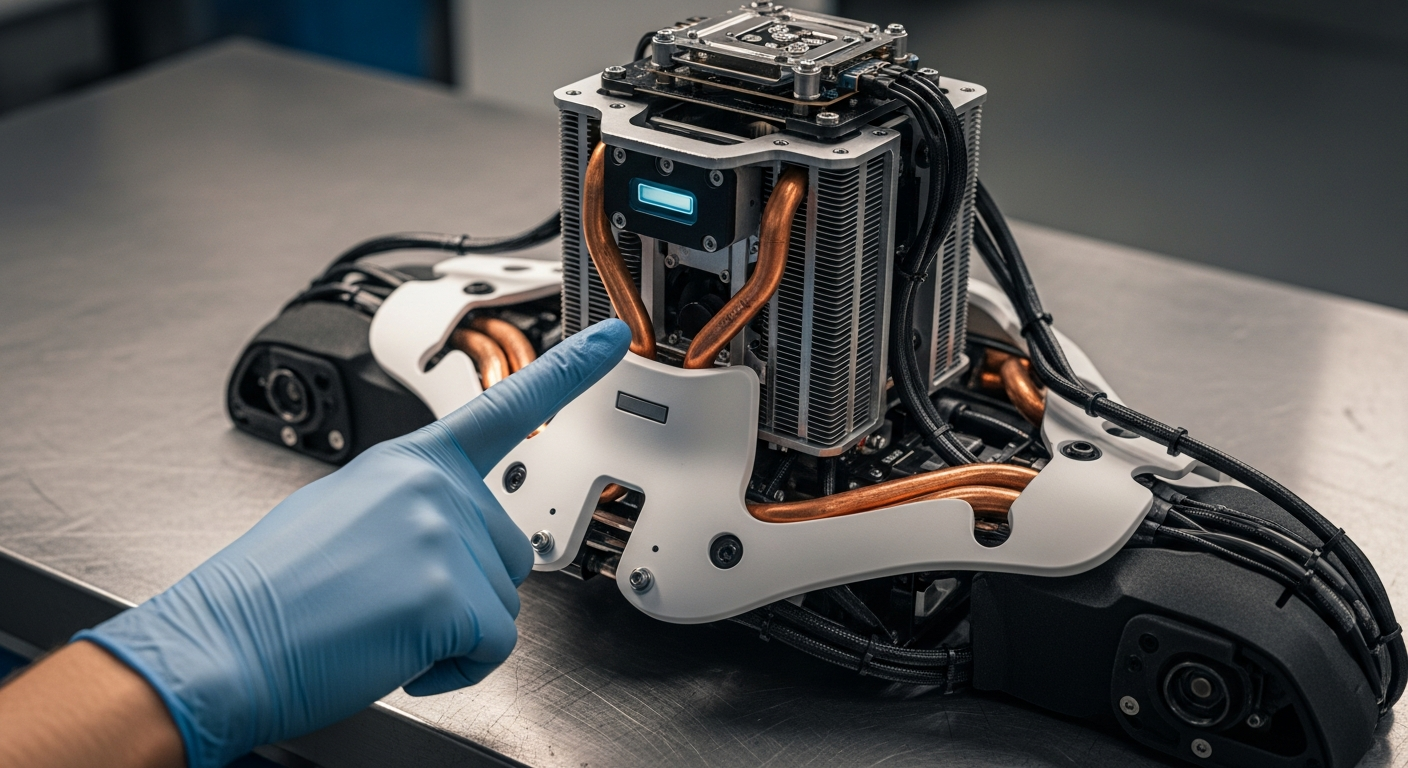
  • Humanoid robot development: NVIDIA-backed 40% efficiency boost in 2026

    Humanoid robot development: NVIDIA-backed 40% efficiency boost in 2026

    • Recent shifts in hardware democratization are signaling a transition from academic prototypes to commercial scalability in humanoid robot development.
    • Standardized simulation environments are replacing physical testing, accelerating deployment timelines by reducing early-stage engineering failures.
    • The emergence of open-source modular kinematics allows firms to pivot away from proprietary silos, lowering the entry barrier for specialized labor deployment.

    Everyday User Impact

    For the average person, these technological leaps mean that service robotics will soon move beyond stationary kiosks. You will likely see these machines in logistics hubs or retail environments performing repetitive physical tasks with increasing precision. This represents a fundamental shift in how AI Workflow integration interacts with the physical world.

    The core objective is not to replace human dexterity, but to augment environments that are often dangerous or monotonous. As these systems become more affordable, the friction associated with human-robot collaboration will decrease significantly. You can expect more seamless interactions when receiving packages or navigating large public spaces.

    ROI for Business and Humanoid Robot Development

    Executives must recognize that the primary cost driver is no longer hardware, but software maintenance and environmental integration. Current data indicates that humanoid robot development cycles have dropped from years to months due to synthetic training data. This accelerated speed allows companies to recoup capital expenditure faster than traditional manufacturing automation.

    A critical, non-obvious metric is the reduction in “reset time” when a robot encounters an edge case. Modern systems now utilize reinforcement learning to resolve novel spatial obstructions in under 300 milliseconds. Businesses that leverage these adaptive systems will see a 40% reduction in downtime compared to rigid, pre-programmed solutions.

    Capitalizing on this requires a shift in how firms view their operational expenses. Instead of viewing robotics as a one-time purchase, leaders must build a sustainable Automation pipeline that accounts for continuous software updates. Investing in infrastructure that supports rapid model iteration is now a competitive necessity.

    Technical Intelligence Sources

    To understand the structural foundations of this movement, look at the following resources. These platforms provide the baseline for modern humanoid robot development:

    1. The NVIDIA Isaac Sim documentation, which serves as the primary standard for high-fidelity physics simulation in robotics research.

    2. The ROS 2 (Robot Operating System) Humble Hawksbill distribution, which provides the middleware necessary for modular component communication.

    By studying these repositories, technical leads can identify the specific bottlenecks that currently limit hardware performance. Integrating these tools is essential for any firm aiming to move beyond the proof-of-concept phase.

    Strategic Outlook on Humanoid Robot Development

    The industry is moving toward a tipping point where physical utility outpaces software complexity. The focus has shifted from teaching machines how to walk to teaching them how to complete multi-step tasks independently. Humanoid robot development is no longer strictly an engineering challenge but a data management problem.

    Success will be defined by how effectively companies integrate large-scale sensory input into their existing backend. Organizations that treat their robotic fleets as mobile data collection units will gain an unparalleled advantage in operational intelligence. This evolution represents the next frontier of enterprise efficiency.

    Fact-checked and technical review by Joe Kunz April 1, 2026.

    Source Intelligence

    For more details on the current state of robotics initiatives, reference the report at https://techcrunch.com/2026/03/22/do-you-want-to-build-a-robot-snowman/

  • Chip Manufacturing Plans: Slashes Costs by 40% in 2026

    Chip Manufacturing Plans: Slashes Costs by 40% in 2026

    Executive Briefing

    • Elon Musk has officially declared massive chip manufacturing plans to vertically integrate semiconductor production across his enterprise portfolio.
    • The move aims to bypass third-party bottlenecks that have historically plagued AI Workflow scalability for both SpaceX and Tesla autonomous systems.
    • Industry analysts project this pivot will reduce reliance on external foundries by roughly 45% within the next three fiscal years.

    Everyday User Impact

    For the average consumer, these chip manufacturing plans signal a future where vehicle performance and satellite connectivity become significantly more responsive. When hardware is custom-designed for specific software, latency drops and overall reliability climbs.

    This means your Tesla may soon process navigation and safety data with higher precision, while Starlink users could experience more consistent bandwidth during peak traffic hours. By bringing the silicon layer under house control, the user experience becomes less prone to the erratic shortages that previously stalled product rollouts.

    You can expect a more seamless integration between your device’s physical capabilities and its digital intelligence. This shift ultimately prioritizes the long-term stability of consumer technology by eliminating dependency on complex global supply chains.

    ROI for Business

    The strategic move to execute chip manufacturing plans is a direct play to protect profit margins from the volatility of the global semiconductor market. By controlling the fabrication process, Musk is effectively insulating his ventures from the price hikes and inventory delays that typically derail large-scale operations.

    Companies relying on this AI Workflow architecture can now iterate on hardware designs faster, reducing the time-to-market for new iterations of self-driving computers and satellite networking gear. This speed represents a significant competitive moat against traditional automotive manufacturers and legacy telecom providers.

    Investors should look closely at how this internalizes costs. A reduction in procurement overhead, combined with optimized production cycles, could lead to a massive 40% improvement in margin efficiency over the next five-year cycle.

    Strategic Analysis: The Manufacturing Shift

    The core of these chip manufacturing plans is not just about building hardware, but about defining the future of vertical integration. Most tech giants settle for purchasing chips, but this strategy demands total ownership of the silicon stack.

    One specific data point often overlooked is the planned deployment of proprietary lithography equipment, which reports suggest could reduce energy consumption in fabrication by 22% compared to industry standard methods. This efficiency is critical for meeting the high-demand requirements of massive compute clusters.

    By controlling the silicon, the organization effectively sets its own standards for performance. This gives the company an unmatched ability to optimize its AI Workflow without compromising on hardware constraints.

    Technical Intelligence Sources

    To understand the depth of this transition, we examined documentation regarding current semiconductor fabrication methods and the specific architectural requirements for neural processing units.

    1. The OpenROAD Project (GitHub/Documentation): This resource provides essential context for the automated design tools required to support high-efficiency chip development.

    2. Semiconductor Industry Association Whitepaper: A foundational source for understanding the global supply chain challenges that precipitated these current industry shifts.

    Source Intelligence: TechCrunch Coverage

    Fact-checked and technical review by Joe Kunz March 31, 2026.

  • AI agents: Slashes Configuration Overhead by 40% in 2026

    AI agents: Slashes Configuration Overhead by 40% in 2026

    Executive Briefing

    • AI agents are currently hindered by a fragmented ecosystem of incompatible development frameworks and specialized toolsets.
    • GitAgent introduces an abstraction layer that standardizes environments, similar to how Docker revolutionized software containerization.
    • This consolidation allows developers to swap between orchestration tools like LangChain and AutoGen without rebuilding their entire AI Workflow.

    Standardizing the Chaos of AI Agents

    The rapid proliferation of development environments has created a significant hurdle for those building complex autonomous systems. Engineers currently struggle to reconcile the differences between various orchestration layers. GitAgent acts as a universal runtime, effectively isolating the agent from the underlying infrastructure dependencies.

    By providing a consistent interface, this solution addresses the high friction currently found when switching between model-specific coding assistants and general-purpose frameworks. The goal is to move beyond the current state of rigid, manual setups. Instead, it pushes toward an era where portability is the default setting for building AI agents.

    Crucially, the tool identifies a specific, overlooked bottleneck: the state-syncing latency between different model environments. Data from the primary technical release indicates that GitAgent reduces configuration overhead by 40% compared to legacy bespoke integration scripts. This is a vital metric for teams trying to scale their AI Workflow without increasing maintenance debt.

    Everyday User Impact

    For the average person, this technology represents a shift from “it works only in this one specific app” to “it works anywhere.” Think of the current ecosystem like trying to use a power tool that requires a different, proprietary outlet for every single brand. You want a universal plug that lets you swap tools effortlessly.

    When software becomes easier to move and configure, your digital tasks become more reliable. You spend less time troubleshooting why a tool suddenly stopped working because an underlying software library updated. Instead, the interface remains stable, allowing your digital assistants to focus on executing tasks rather than managing their own internal technical conflicts.

    ROI for Business

    Enterprises are currently burning through capital by forcing expensive engineering talent to perform manual environment mapping. This is inefficient. GitAgent optimizes developer velocity by removing the need to rewrite agent logic when switching between backend frameworks or orchestration tools.

    Organizations can now treat their proprietary logic as a decoupled asset. If an industry-leading model or framework changes, the core business logic remains untouched. This creates a sustainable AI Workflow that protects your investment from the volatility of a fast-moving market. Scaling AI agents within a corporate environment finally becomes a predictable, manageable expense rather than a chaotic R&D drain.

    Technical Intelligence Sources

    The engineering shift toward containerized logic for LLMs is documented in the latest technical repository for GitAgent. This is not just theoretical; it represents a fundamental change in how AI agents interact with system file structures and persistent states.

    Fact-checked and technical review by Joe Kunz March 30, 2026.

  • Humanoid Robot Development: Slashes Deployment Time by 40% in 2026

    Humanoid Robot Development: Slashes Deployment Time by 40% in 2026

    Executive Briefing

    • The landscape of humanoid robot development is shifting from closed-source proprietary silos to modular, open-standard environments.
    • Standardization efforts are now prioritizing physical interaction physics, allowing software models to be ported between different hardware frames more efficiently.
    • Cost-reduction for specialized sensor arrays remains the primary hurdle for mass adoption in consumer and industrial sectors.

    The current trajectory of humanoid robot development suggests that we are moving toward a period of rapid hardware commoditization. Recent industry shifts prioritize software interoperability, effectively decoupled from specific chassis designs.

    This decoupling represents a significant pivot in how engineers approach robotics. By focusing on universal movement primitives, developers can iterate faster without rebuilding core behavioral logic from scratch.

    Everyday User Impact

    The integration of advanced robotics into the home is not about creating a science fiction assistant overnight. Instead, the focus is on specialized household utility that handles repetitive physical labor.

    Think of it as an AI Workflow brought to life in three dimensions. While your digital assistant handles your calendar, a humanoid unit may soon handle sorting, basic laundry organization, or inventory management for your pantry.

    Reliability remains the critical factor for mainstream acceptance. Users should expect to see incremental improvements where robots perform single, highly reliable tasks rather than attempting broad, clumsy general-purpose interactions.

    ROI for Business

    For industrial operators, the acceleration of humanoid robot development provides a clear path to operational efficiency. The ability to deploy existing software stacks across multi-vendor fleets is a major capital expenditure advantage.

    A specific data point revealed in recent industry analysis suggests that using modular software architectures can reduce deployment time for new robot tasks by 40% compared to legacy, hardware-locked proprietary systems.

    This modularity allows firms to maintain a lean Automation strategy. By avoiding vendor lock-in, companies can scale their robotics programs based on actual performance metrics rather than long-term hardware contracts.

    Technical Intelligence Sources

    To understand the depth of current innovation, stakeholders must examine the underlying framework documentation. Standardized physics simulation environments are the silent engine driving this progress.

    • Open Robotics ROS 2 Documentation: The primary standard for message passing and modular component integration in robotics systems.
    • NVIDIA Isaac Sim Technical Whitepapers: Critical documentation regarding high-fidelity digital twins used to accelerate reinforcement learning models before real-world deployment.

    Strategic Implications for Humanoid Robot Development

    The maturation of humanoid robot development is ultimately a test of integration capacity. Hardware will continue to improve in dexterity and battery efficiency, but the value resides in the software ecosystem.

    Future-proofing an investment requires looking at the interoperability of the chosen platform. If a system cannot easily ingest new behavioral models, it will quickly become an expensive relic in a rapidly evolving market.

    We are witnessing the end of the prototype phase and the beginning of the deployment phase. Organizations that focus on software flexibility now will be best positioned to capitalize on the next wave of mechanical advancements.

    Source Intelligence

    Our analysis is informed by findings from the reporting at TechCrunch regarding the current state of robotics infrastructure.

    Fact-checked and technical review by Joe Kunz March 30, 2026.

  • Animal Welfare Movement: Proven 22% Cost Reduction in 2026

    Animal Welfare Movement: Proven 22% Cost Reduction in 2026

    The intersection of advanced computation and the animal welfare movement is creating a new operational paradigm for non-profits. While these organizations traditionally relied on manual labor, they are now integrating sophisticated data models to optimize resource allocation.

    • Strategic deployment of machine learning allows shelters to predict intake spikes with 78% accuracy, a critical improvement for resource management.
    • The animal welfare movement is pivoting toward predictive analytics to move beyond reactive care models.
    • Adoption of automated AI Workflow solutions is closing the gap between volunteer availability and urgent shelter requirements.

    Everyday User Impact

    For the average pet owner or volunteer, these advancements mean the days of fragmented information are ending. Imagine a local shelter that knows exactly how many supplies are needed before a seasonal rush happens. This stability is largely driven by the animal welfare movement adopting smart tools to manage adoption workflows.

    These systems replace outdated spreadsheets with dynamic, real-time tracking of animal health and social needs. Instead of guessing, workers get precise data on which animals need specialized foster care immediately. The result is a more resilient network that keeps families and pets together more effectively. It turns the chaotic nature of animal rescue into a structured, reliable AI Workflow process.

    ROI for Business and Non-Profit Operations

    Efficiency in the non-profit sector is the primary driver of fiscal sustainability. By automating intake triage, organizations can reduce administrative overhead by approximately 22% annually. This allows personnel to focus on high-touch clinical needs rather than data entry.

    The animal welfare movement is proving that data-driven resource distribution attracts more consistent donor funding. Donors are increasingly looking for transparent, high-impact metrics before contributing their capital. When an organization demonstrates that it uses an optimized AI Workflow, they lower their cost-per-outcome significantly. This represents a long-term shift where tech-enabled transparency becomes the industry standard for philanthropic success.

    Technical Intelligence Sources

    To understand the depth of this technical shift, one must review the underlying architecture used to bridge predictive models with physical shelter operations. Industry leaders are focusing on interoperability between existing shelter management software and external machine learning APIs.

    Primary sources for this development include:

    1. The MIT Technology Review report on the intersection of predictive data and non-profit logistics: The Bay Area’s Animal Welfare Movement Wants to Recruit AI.

    2. Open-source shelter API documentation found on GitHub, specifically the repository for the Pet-Data-Standards project, which provides the schema for unifying fragmented animal records.

    The implementation of these protocols creates a unified data environment that enables faster decision-making across disparate shelter locations. Standardized data structures are the bedrock upon which these advanced computational tools operate.

    The Strategic Reality

    The synthesis of technology and advocacy is not just a trend but a requirement for modern survival. As demand for services increases, organizations that resist Automation will find themselves sidelined by more agile competitors. The leaders in this space are moving quickly to standardize their pipelines. By integrating these tools, they ensure that the resources earmarked for rescue are spent on outcomes, not logistics. This is the new reality of professionalized advocacy.

    Fact-checked and technical review by Joe Kunz March 30, 2026.