
Executive Briefing
- The animal welfare movement is pivoting from emotional advocacy to high-precision engineering, utilizing San Francisco’s tech density to build AI systems that monitor industrial farming and laboratory testing.
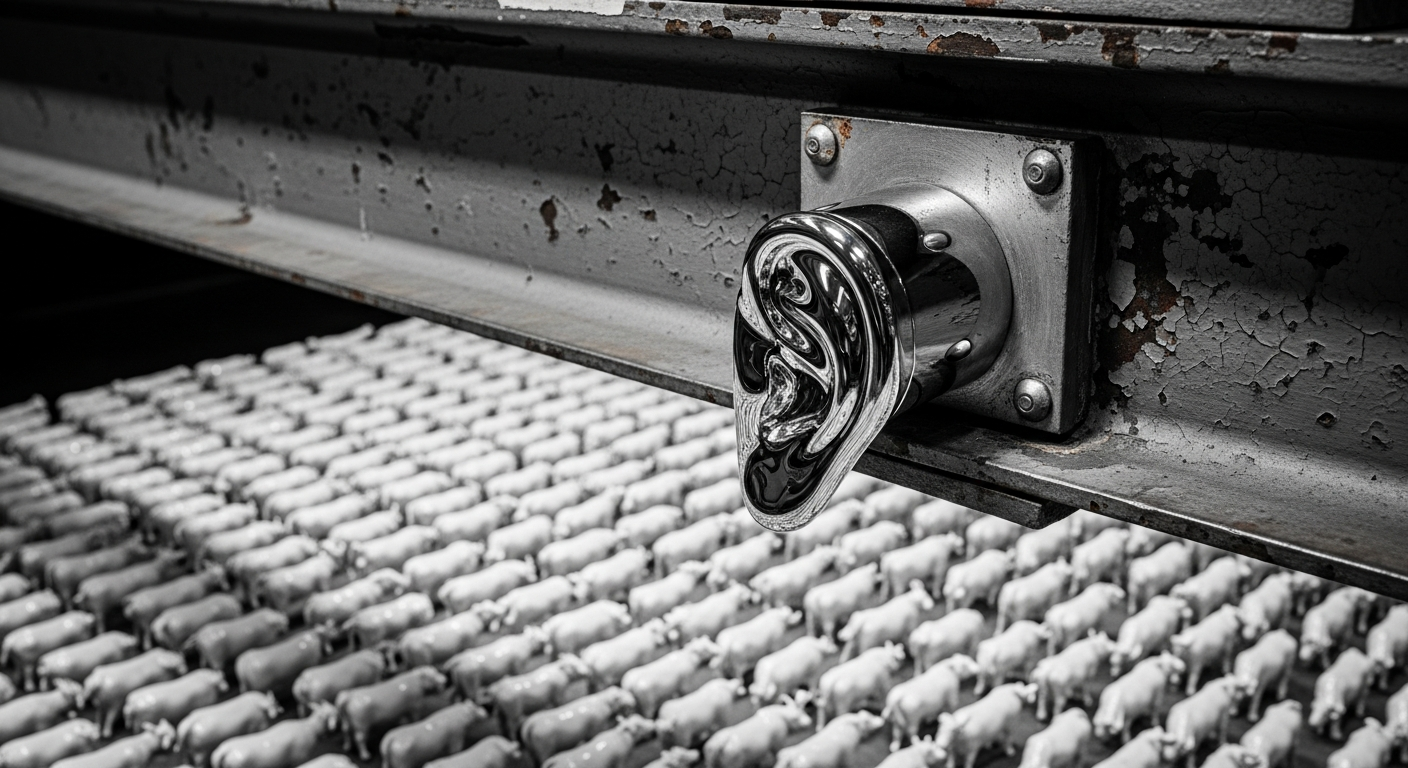
- Strategic funding from the Effective Altruism (EA) community is shifting toward “interspecies communication” and automated bioacoustic monitoring, aiming to quantify animal suffering as a data point for policy change.
- The emergence of “Welfare-as-a-Service” tools allows activists to bypass traditional gatekeepers by using computer vision and satellite imagery to audit global supply chains in real-time.
Everyday User Impact
The immediate shift for the average person will be a drastic increase in transparency regarding what you consume and how you interact with nature. Imagine walking through a grocery store and using an app to scan a carton of eggs. Instead of relying on vague marketing terms like “pasture-raised,” AI-driven databases—fed by real-time satellite and acoustic sensors—will provide a verified score of the actual living conditions on that specific farm. This removes the guesswork from ethical consumption.
For pet owners, this technological wave translates into sophisticated health diagnostics. We are moving past simple activity trackers for dogs and cats. New AI tools are being trained on massive datasets of animal vocalizations and facial expressions to detect early signs of pain or distress that humans often miss. Your home camera system might soon alert you that your cat has a brewing kidney issue or dental pain based on subtle changes in its “grimace scale” or the frequency of its purr, long before a visible symptom appears.
ROI for Business
For the agriculture and pharmaceutical sectors, the integration of AI into animal welfare represents a dual-edged sword of high-stakes risk and operational efficiency. Companies that fail to modernize their welfare monitoring face unprecedented reputational exposure; activists now possess the technical capability to detect non-compliance through automated acoustic analysis and thermal imaging from outside factory walls. Conversely, businesses that adopt these AI tools can significantly reduce “shrinkage” or loss due to disease outbreaks. Real-time welfare monitoring serves as an early-warning system for herd health, potentially saving millions in lost inventory. In the ESG (Environmental, Social, and Governance) landscape, data-backed welfare metrics are becoming a hard requirement for institutional investment, turning animal care from a cost center into a core compliance asset.
Automate Your AI Operations
This entire newsroom is fully automated. Stop manually coding API connections and scale your enterprise AI deployments visually.
Start Building for Free →The Technical Shift
The fundamental technical evolution here is the transition from generative AI to interpretive, multimodal sensing. While the last two years focused on Large Language Models (LLMs) that process human text, the new frontier involves “Large Bioacoustic Models” and specialized computer vision. These systems are trained to identify “stress signatures” across species boundaries. This requires a massive shift in how data is labeled; engineers are no longer just tagging photos of “cats” versus “dogs,” but are instead mapping micro-expressions in porcine or bovine subjects to correlate with cortisol levels and physiological distress.
Strategically, the movement is leveraging the concept of “Digital Twins” for ecological systems. By creating a digital replica of a farm or a wildlife corridor, AI can simulate the impact of environmental changes on animal populations. This allows for predictive advocacy—identifying potential welfare crises before they occur. The movement is essentially building a decentralized, AI-powered regulatory layer that operates faster and more accurately than human inspectors, turning the Bay Area’s silicon-centric ethos into a global watchdog mechanism.