
Executive Briefing
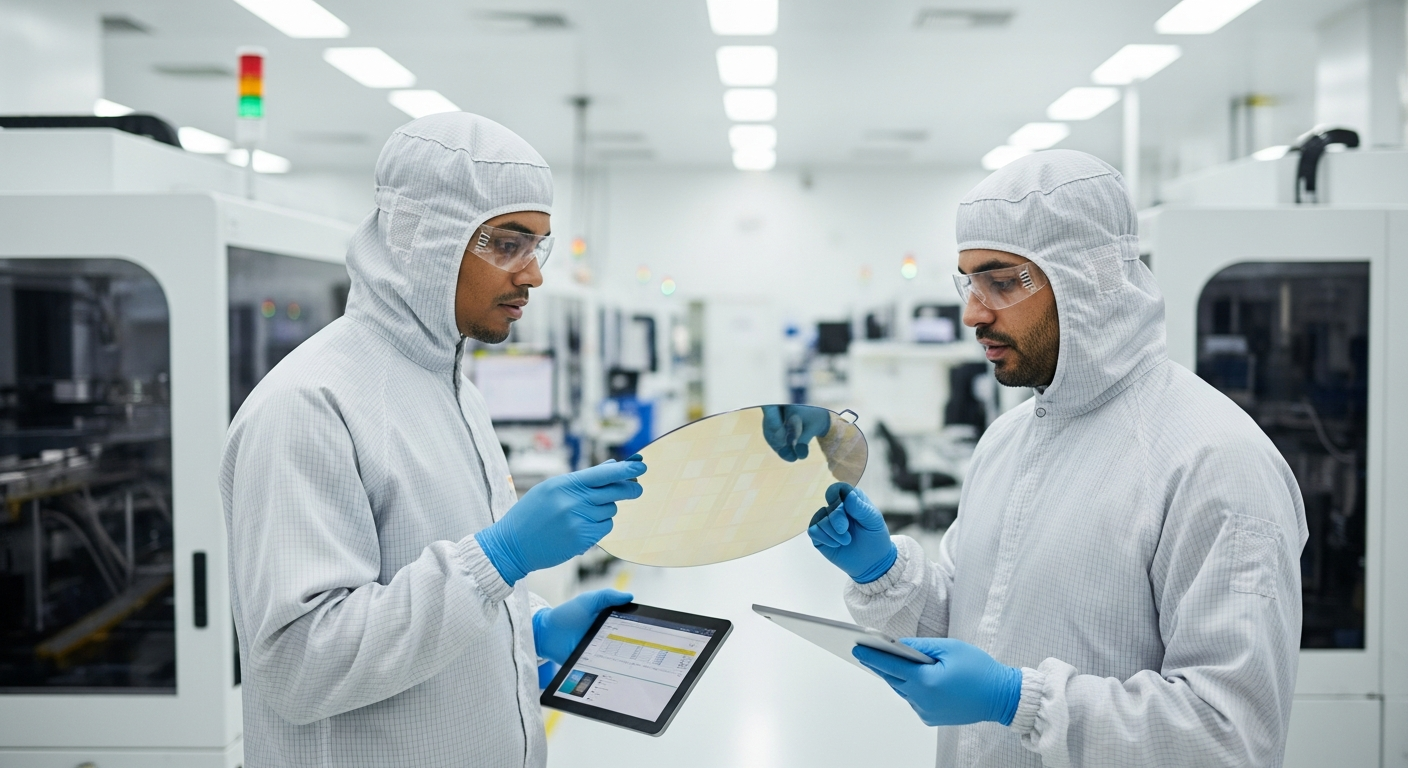
- Vertical Sovereignty: Tesla and SpaceX are moving to eliminate reliance on external silicon providers like NVIDIA and TSMC by building proprietary fabrication facilities designed for high-performance edge computing.
- Supply Chain De-risking: This strategic pivot addresses chronic semiconductor shortages and geopolitical instability by internalizing the entire production lifecycle, from architecture design to physical manufacturing.
- Specialized Architecture: The initiative focuses on dual-purpose silicon—radiation-hardened chips for SpaceX’s Starlink and orbital platforms, and high-inference ASICs (Application-Specific Integrated Circuits) for Tesla’s humanoid robots and autonomous driving systems.
Everyday User Impact
For the average consumer, this shift translates to faster, more capable hardware that does not rely on a constant cloud connection. If you drive a Tesla, this means the vehicle’s “brain” will process complex visual data with significantly lower latency, potentially making Full Self-Driving maneuvers feel smoother and more human-like. Because the hardware is designed specifically for the car’s software, the system becomes more energy-efficient, which can slightly extend battery range by reducing the power draw from the onboard computer.
For Starlink users, custom silicon means smaller, more powerful ground terminals. Current satellite internet hardware often struggles with heat and power consumption; bespoke chips will allow for faster data speeds and more stable connections during peak usage. Beyond the hardware you buy, this move signals a shift toward “local intelligence.” Your devices will soon perform complex AI tasks—like real-time translation or advanced navigation—directly on the device rather than sending your data to a remote server. This increases both your privacy and the speed at which your tech responds to your commands.
ROI for Business
The financial logic behind this move is the elimination of the “NVIDIA tax.” By designing and manufacturing their own chips, Tesla and SpaceX can capture the massive margins currently claimed by third-party chipmakers. For institutional investors and enterprise partners, this represents a transition from a hardware integrator to a full-stack technology sovereign. While the initial capital expenditure for fabrication plants is massive—often cited in the tens of billions—the long-term reduction in cost-per-unit for millions of vehicles and satellites creates a defensible moat. Companies that control their silicon supply are immune to the bidding wars and allocation quotas that currently throttle the growth of competitors. However, the risk remains high; any delay in fab yield or architectural flaws could stall product cycles for years, turning a strategic asset into a multi-billion-dollar bottleneck.
Automate Your AI Operations
This entire newsroom is fully automated. Stop manually coding API connections and scale your enterprise AI deployments visually.
Start Building for Free →The Technical Shift
We are witnessing the end of the general-purpose silicon era for high-performance robotics. For years, companies have used off-the-shelf GPUs to power AI because they were the best available option, not the most efficient one. Musk’s plan shifts the focus toward ASICs optimized for “sparse” neural networks—the specific type of AI used in real-world navigation and kinetic movement. Unlike a standard chip that tries to be good at everything, these new chips will be wired specifically to handle video ingestion and spatial mapping.
In the aerospace sector, the technical challenge is even steeper. SpaceX requires chips that can survive heavy cosmic radiation without “bit-flipping” or hardware failure. Traditionally, radiation-hardened chips are several generations behind terrestrial tech in terms of speed. By bringing manufacturing in-house, SpaceX aims to bridge this gap, producing 5nm or 3nm chips that possess both the durability of a satellite and the processing power of a modern smartphone. This convergence of “hardened” and “high-performance” silicon is a milestone that could accelerate the deployment of autonomous systems in environments where consumer-grade electronics would simply melt or malfunction.