
Executive Briefing
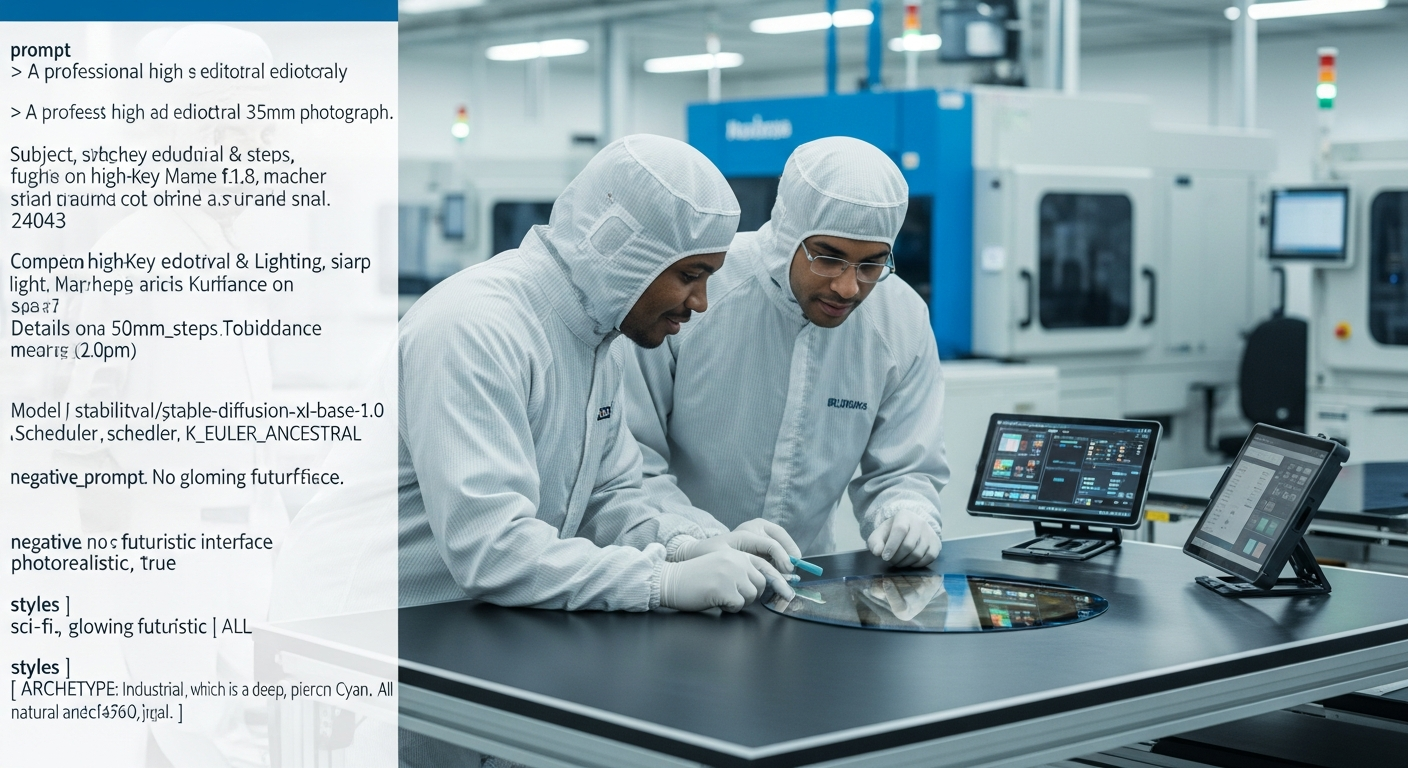
- Elon Musk has officially pivoted Tesla and SpaceX toward internal semiconductor manufacturing, aiming to end the era of reliance on external foundries like TSMC and Samsung.
- The strategic shift focuses on creating a “closed-loop” hardware ecosystem, insulating these companies from the geopolitical instability and supply chain bottlenecks currently plaguing the global chip market.
- The primary output will be custom-designed ASICs (Application-Specific Integrated Circuits) optimized specifically for autonomous navigation and global satellite latency.
Everyday User Impact
For the average consumer, this means the hardware you interact with will become both cheaper and significantly faster. If you are a Starlink subscriber, custom-built chips will likely lead to a reduction in the price of the ground terminal, as the expensive internal components move from third-party sourcing to high-volume internal production. For Tesla drivers, this shift manifests in the “intelligence” of the vehicle. Instead of using general-purpose chips that try to do everything, these new chips are designed only for driving. This results in smoother lane changes, faster obstacle recognition, and improved battery range because the car’s computer uses less power to think. You will eventually spend less time waiting for software downloads and more time utilizing a vehicle that feels more responsive and energy-efficient.
ROI for Business
The business logic here is a high-stakes play for margin expansion and absolute supply chain sovereignty. By removing the “foundry tax” and the markups associated with Nvidia or other providers, Musk is positioning Tesla and SpaceX to recapture roughly 20% to 30% of their hardware COGS (Cost of Goods Sold). While the initial capital expenditure to build “Gigafabs” is measured in the billions, the long-term value lies in the speed of iteration. Most companies are forced to wait for the next chip cycle from external vendors; Musk can now sync hardware releases directly with software breakthroughs. For investors, the risk is the sheer complexity of silicon yields. However, the ability to bypass global chip shortages provides a competitive moat that ensures production lines never stall due to external political or logistical failures.
The Technical Shift
This move represents a fundamental transition from a “fabless” design philosophy to an “Integrated Device Manufacturer” (IDM) model. Most tech giants currently design silicon but outsource the actual manufacturing to specialized factories. By bringing the manufacturing floor in-house, Tesla and SpaceX are moving toward hyper-optimization. Current AI chips are built to be versatile, but versatility breeds inefficiency. The new technical roadmap prioritizes “edge-first” architecture—silicon designed to perform massive neural network calculations locally on a vehicle or satellite without needing to ping a central server. This reduces latency to near-zero levels. Furthermore, by controlling the lithography process, they can optimize for thermal efficiency, ensuring that high-performance AI tasks do not overheat the hardware in the vacuum of space or the confined trunk of a car.
Automate Your AI Operations
This entire newsroom is fully automated. Stop manually coding API connections and scale your enterprise AI deployments visually.
Start Building for Free →